
By Pamela Collins
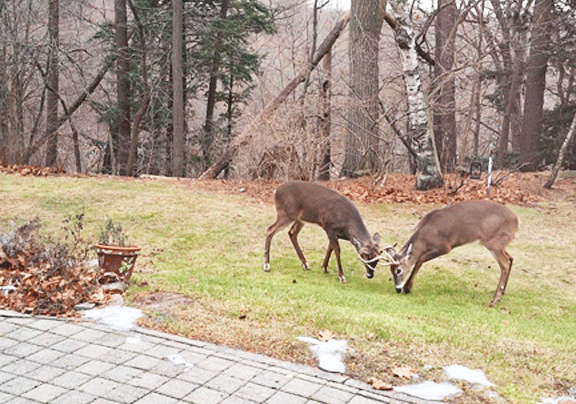
Living on a ravine property, we see many deer ambling through our back garden, but what we saw on Christmas Day was truly awesome! Two bucks were trying to remove each other’s antlers.
Every winter across southern Ontario something remarkable happens: male deer drop their antlers. It’s a natural cycle that repeats each year, and it’s driven by hormone changes, not by injury or stress.
According to AnimalWise, during the mating season (or rut) the bucks experience a rise in testosterone that stimulates the growth of antlers. Antlers can take up to 150 days to grow, and they are made of real bone. But unlike horns, they aren’t permanent. Deer grow a fresh set every year as part of their reproductive cycle.
In late summer and fall, rising testosterone levels help harden the antlers in time for the rut, when bucks compete for mates. Once the mating season ends, those hormone levels drop, triggering a weakening at the base of the antler allowing it to loosen and eventually fall away.
Antlers play an important role in displays during courtship and combat for mates among males. The larger antlers are seen by females as more attractive as a sign of good health and fitness.
In our region, shedding, also known as antler regeneration, usually happens between late December and March. Older bucks, who expend more energy during the rut, often shed earlier while younger deer may hold onto theirs a little longer.
Almost as soon as the antlers drop, new growth begins. Through spring and summer, the next set grows quite quickly under a soft, velvety layer filled with nerve endings that supply nutrients until the bone hardens again.
Growing and maintaining antlers is an energy-intensive process that requires substantial nutrients, especially through the harsh winter months. By shedding their antlers, deer conserve energy and these nutrients when food is scarce.
Deer will assist each other to lose their antlers, as seen in the photo, but they will also rub against trees to help get them off. I lost two birch trees as the bark was rubbed clean off by the deer attempting to shrug off their antlers.
Many people in Ontario enjoy “shed hunting”: walking trails and wooded areas in early spring to look for antler “shed.” It’s a popular pastime and CBC News notes that some collectors find dozens each year.
If you happen to stumble across one unexpectedly, understanding the antler cycle helps you appreciate our natural wildlife. It also reassures people who find an antler that the deer is not injured, it’s just following its natural rhythmic cycle.