
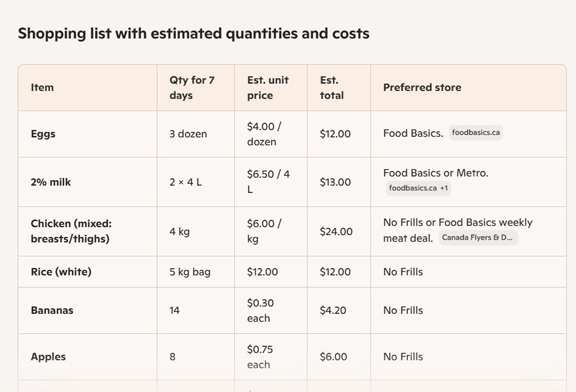
Results from an AI inquiry seeking the best weekly food deals from local grocery stores
By John Murphy
Over the past year, AI has been a topic of conversation at social gatherings I have attended. The realization of artificial intelligence moving from the realm of science fiction into the fabric of everyday life has led me to a simple question: “How are others in my neighbourhood making use of AI?” I have learned that AI can influence how we shop, work, communicate, and make decisions. There are those of you that are early adopters and are already on the bandwagon with AI, while others have been more reluctant to engage. Regardless of where you are, I think our community can benefit from knowing how residents of Centennial can use AI to navigate rising costs, busy schedules, and a rapidly changing work life.
Improving digital literacy can be a challenge. I think that those who learn to use AI, will gain advantages by learning how to process information quickly, automate repetitive tasks, and make smarter choices with less effort. I wonder if there are residents like me who do not want to fall behind as AI becomes a standard tool across workplaces, schools, and households. Having said this, I am accepting the challenge and am willing to learn about AI by using it and asking people in our neighbourhood how they use it.
PRACTICAL USES OF AI
It is easy to assume our Centennial community life revolves around commuting, school routines, and family responsibilities. Did you know that AI can be a powerful time-saver? Parents can use AI to plan weekly meals, draft school communications, or create chore charts.
With food prices rising across Canada, AI is emerging as a valuable budgeting tool. Families can use AI to compare weekly flyers from major grocery chains, identify the lowest prices, and build shopping lists based on current deals. I used the following prompt to have AI generate a budget conscious 7-day meal and shopping list based on regular and “flyer” priced items from our three local food stores. You can use this link and play with this prompt to get your own results. copilot.microsoft.com.
Modifying this prompt to suggest recipes can reduce waste, track price trends, or recommend cheaper substitutions—like choosing in-season produce or swapping chicken breasts for thighs. By combining flyer data, meal planning, and smart substitutions, AI can help households save $20 to $60 per week without sacrificing nutrition.
THE CHALLENGE TO LEARN AI
The path to AI literacy is less intimidating than I assumed. I started by experimenting with conversational AI tools—systems that answer questions, generate ideas, and help with planning. I will continue using AI for small tasks or organizing schedules. I believe just 10 minutes daily will help me (the beginner) learn how to ask better questions, refine prompts, and apply AI to more complex tasks.
I am also planning to research and write about how our local schools and businesses are taking advantage of AI tools and resources available to understand what this means for us Centennial residents. Learning how local professionals are using AI can broaden our understanding of how we are benefiting from it.
Finally, I would like to hear from our CCRA Newspaper readers on how they are using AI. Are you using AI to draft renovation plans, plan vacations or help your children use it effectively for homework, study guides, and project planning? If you have questions about AI or you want to share your experiences and practical usage of AI, please send me a note at transportation@ccranews.com